


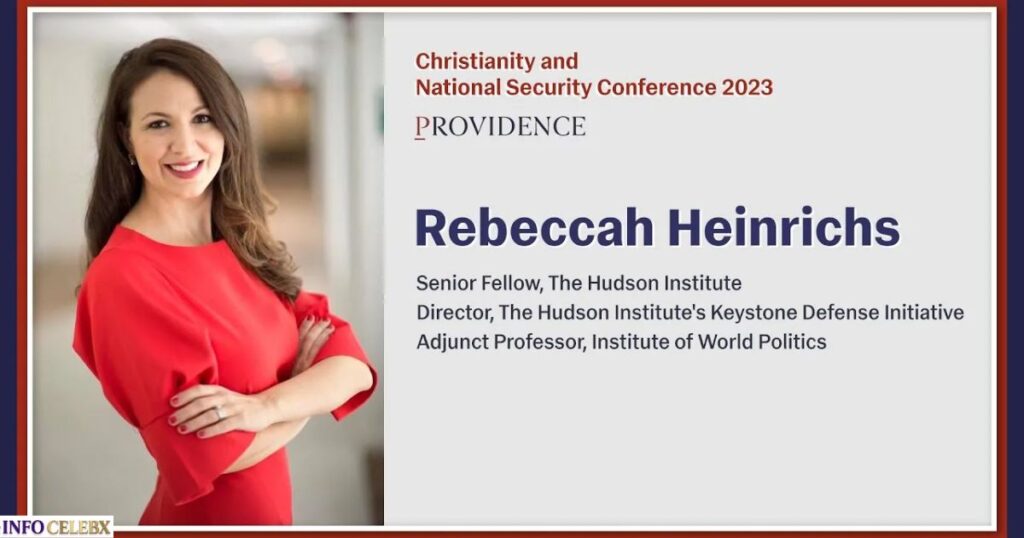
Rebeccah Heinrichs is one of America’s most influential defense policy analysts. She has spent years shaping how the U.S. thinks about missile defense and nuclear deterrence. This article covers her life, career, achievements, and everything worth knowing in 2026.
Quick Facts at a Glance
| Category | Details |
| Full Name | Rebeccah L. Heinrichs |
| Profession | Senior Fellow, Defense Policy Analyst |
| Organization | Hudson Institute |
| Area of Expertise | Missile Defense, Nuclear Deterrence, National Security |
| Nationality | American |
| Education | Advanced studies in international relations & security policy |
| Media Appearances | Fox News, CNN, major policy forums |
| Known For | Nuclear deterrence advocacy, congressional testimony |
| Social Media | Active on X (Twitter), LinkedIn |
| Net Worth (2026) | Estimated $1M–$3M |
| Marital Status | Private |
| Current Status | Active in policy research and public commentary |
Who Is Rebecca Heinrich?
Rebeccah Heinrichs is one of America’s most respected voices in national security policy. She works as a senior fellow at the Hudson Institute in Washington, D.C., where she focuses on nuclear deterrence, missile defense strategy, and broader questions of American military preparedness.
She is not a political figure in the traditional sense. She operates in the serious, technical world of defense policy — a world where decisions made on paper eventually shape military budgets, strategic alliances, and international negotiations.
What makes her stand out is her ability to take deeply complex defense topics and communicate them clearly — whether in a congressional hearing room, a policy paper, or a live television segment on Fox News.
Her work sits at the crossroads of academia, government advisory roles, and media commentary. That combination is rare and is precisely what has earned her a reputation as a credible, influential analyst.
She is recognized not just by fellow researchers but also by lawmakers, military officials, and international security professionals who follow her work closely. In a field dominated by institutional voices, Heinrichs has carved out a distinct and authoritative presence.
Related Read: Maneet Chauhan Net Worth
Early Life, Family & Background
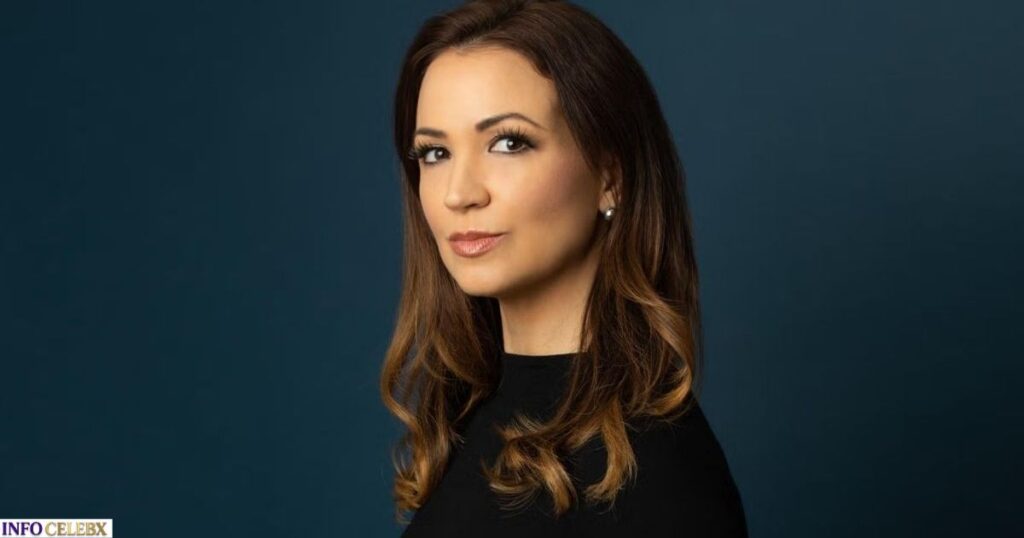
Rebeccah Heinrichs was born and raised in the United States. While she keeps much of her personal and family life away from public view, what is clear is that she grew up in an environment that valued education, discipline, and civic awareness.
Her family background appears to have been grounded in traditional American values. There is no public record suggesting her parents were directly involved in politics or defense, yet her path toward national security work suggests she developed an early awareness of public service and its importance.
One question that frequently circulates online is whether Rebeccah Heinrichs is related to Fox News correspondent Jacqui Heinrich. Despite sharing the same surname and both having prominent media-facing roles, there is no confirmed familial connection between the two. The similarity in their last names appears to be coincidental.
Rebeccah has kept details about siblings, parents, and extended family largely private — a choice that reflects her preference for letting her professional work speak for itself.
What is known is that her early years laid a strong foundation for the intellectual rigor and policy focus she would later bring to her career.
Education & Formative Influences
Education has always been central to Rebeccah Heinrichs’ identity as a policy professional. She pursued advanced academic study with a clear focus on international relations, security policy, and strategic studies.
Her academic training gave her the analytical tools needed to assess complex geopolitical threats—from nuclear proliferation to ballistic missile development. The theoretical frameworks she absorbed during her studies became the backbone of her later policy arguments.
Beyond formal education, Heinrichs was shaped by a broader intellectual environment. The post-9/11 era, the rise of rogue state nuclear programs, and America’s ongoing debates about missile defense all served as formative backdrops during her academic years.
She has cited the importance of understanding history as a guide to policy. Her work reflects a deep familiarity with Cold War deterrence theory, arms control history, and the evolving nature of 21st-century threats.
Mentors within the defense and policy community also played a role in shaping her approach. She entered a field that rewards precision, credibility, and depth — and her education prepared her well for those demands.
Her academic credentials, combined with hands-on policy experience, gave her a dual authority that few analysts possess: the ability to think theoretically and act practically.
Career Foundation & Early Struggles
Like most serious policy professionals, Rebeccah Heinrichs did not arrive at the Hudson Institute overnight. Her career was built gradually, through a series of roles that deepened her knowledge and expanded her network within Washington’s defense community.
In her early career, she worked in positions connected to Capitol Hill and national security policy circles. These roles gave her direct exposure to the legislative process, the bureaucratic structures of American defense policy, and the political dynamics that shape military decision-making.
Early career struggles in this field are common. Defense policy is a highly competitive, credential-heavy environment. Young analysts must prove their expertise consistently, often producing detailed research that is scrutinized by experienced professionals and policymakers.
For Heinrichs, the challenge was also one of visibility. Building a reputation as a credible voice on missile defense—a technically demanding subject—requires years of sustained focus and output. She met that challenge by consistently producing well-researched, clearly argued policy work.
She also had to navigate the complexity of being a woman in a field historically dominated by men. Rather than drawing attention to that dimension, she let the quality of her work define her standing—a quiet but effective approach that earned genuine respect.
Those foundational years, though demanding, gave her something invaluable: a ground-level understanding of how American defense policy is actually made, argued, and implemented.
Rise to Prominence
Rebeccah Heinrichs rose to prominence through a combination of institutional credibility, consistent media engagement, and timely policy contributions.
Her affiliation with the Hudson Institute gave her a respected platform. The Hudson Institute is one of Washington’s most established think tanks, known for serious, non-partisan policy research. Being a senior fellow there signals a level of expertise that opens doors in government, media, and international policy forums.
Her visibility grew significantly through her appearances on Fox News, where she became a recognizable commentator on defense and national security topics. Television gave her arguments a reach that academic papers alone could never achieve. She spoke with authority on subjects ranging from North Korean missile threats to U.S. nuclear modernization—topics that demand precision and confidence on camera.
At the same time, her written work gained traction in policy circles. Her research papers, op-eds, and congressional testimonies positioned her as a go-to analyst on missile defense—a subject that gained increasing urgency as adversarial nations accelerated their weapons programs.
She also became known for her willingness to take clear, principled positions rather than offering vague, hedged commentary. In a world full of diplomatic ambiguity, that directness made her stand out.
By the mid-2010s, she was no longer just a rising analyst. She had become an established, sought-after voice—one that policymakers, journalists, and fellow researchers treated as a primary reference point on American deterrence strategy.
Notable Works & Key Contributions

Rebeccah Heinrichs has built an impressive body of work that spans policy papers, congressional testimony, media commentary, and public advocacy. Her contributions are concentrated in three core areas: missile defense, nuclear deterrence, and alliance strategy.
| Work / Contribution | Type | Significance |
| Missile Defense Policy Research | Academic/Policy Papers | Influenced congressional debate on defense spending |
| Congressional Testimonies | Legislative Advocacy | Directly informed Senate and House defense committee discussions |
| Fox News Commentaries | Media Appearances | Brought technical defense issues to mainstream audiences |
| Hudson Institute Publications | Think Tank Research | Shaped policy community understanding of deterrence gaps |
| Nuclear Modernization Advocacy | Public Policy Work | Supported arguments for updating America’s nuclear arsenal |
| Alliance Strategy Analysis | Strategic Research | Examined U.S. commitments to NATO and Indo-Pacific partners |
| Op-Eds in National Publications | Written Commentary | Reached policymakers and informed public debate |
| International Conference Participation | Public Diplomacy | Represented American strategic thinking on global stages |
Her research has consistently argued that strong, credible deterrence — backed by modern capabilities — is the most effective way to prevent conflict. That argument, once considered hawkish by some, has gained broader acceptance as global threat landscapes have shifted.
She has also contributed to public understanding of what missile defense actually means in practice—not as a magic shield but as one layer of a broader strategic posture. That nuance is a hallmark of her work.
Defining Moments & Breakthroughs
Every career has turning points — moments that sharpen a professional’s focus and raise their public profile. For Rebeccah Heinrichs, several such moments stand out.
Her congressional testimonies were among the most defining. Appearing before Senate and House defense committees, she made the case for missile defense investment with clarity and force. These moments placed her arguments directly in front of the lawmakers who control defense budgets and policy direction.
Her sustained presence on Fox News also marked a turning point. Regular television appearances brought her into living rooms across America, giving defense policy a human face and a comprehensible voice. She became one of the few analysts capable of explaining deterrence theory to a general audience without oversimplifying it.
The North Korean nuclear crisis of the late 2010s was another inflection point. As Pyongyang accelerated its missile and nuclear weapons development, Heinrichs’ expertise became acutely relevant. She was among the analysts called upon repeatedly to explain the threat and evaluate American response options.
Russia’s invasion of Ukraine in 2022 further amplified its relevance. Questions about nuclear signaling, NATO commitments, and extended deterrence — subjects she had written about for years — suddenly dominated global headlines. Her prior work provided a ready framework for understanding the crisis.
Each of these moments did more than raise her profile. They validated the years of preparation and research she had invested and confirmed her standing as one of America’s essential defense thinkers.
Current Role & Present-Day Activities
As of 2026, Rebeccah Heinrichs continues her work as a senior fellow at the Hudson Institute. Her current focus reflects the most pressing strategic challenges facing the United States—chief among them the simultaneous nuclear modernization efforts of China, Russia, and North Korea.
She remains active as a public commentator, appearing regularly on Fox News and participating in policy forums and conferences. Her commentary in 2026 has addressed topics including the future of the U.S. nuclear triad, the strategic implications of Chinese military expansion, and the adequacy of American missile defense infrastructure.
She also contributes to Hudson Institute publications, producing research that feeds directly into Washington’s policy debates. Her work is read by congressional staff, Pentagon officials, and allied government analysts who rely on think tank research to frame their own policy positions.
Beyond formal research, Heinrichs remains engaged in public education—helping general audiences understand why defense investment matters and what is at stake in the current strategic environment. That public-facing dimension of her work has only grown in recent years as global security concerns have intensified.
She is, in every practical sense, at the height of her professional influence in 2026
Related Read: Maneet Chauhan Age
Impact on Her Field & Community

Rebeccah Heinrichs has had a measurable impact on American defense policy discourse. Her influence operates on multiple levels—intellectual, legislative, and public.
At the intellectual level, her research has helped define how the policy community thinks about missile defense and deterrence in the 21st century. She has consistently argued that outdated deterrence frameworks are insufficient for a world with multiple nuclear-armed adversaries—an argument that has gradually moved from the margins to the mainstream.
At the legislative level, her congressional testimonies have informed real policy decisions. When analysts of her caliber testify before defense committees, their arguments shape the questions lawmakers ask, the priorities they set, and ultimately the budgets they approve.
At the public level, her media work has raised general awareness of defense issues that many Americans previously considered too technical or abstract to engage with. She has helped build a more informed public conversation about national security.
She has also served as an informal model for younger women entering the defense and national security fields—demonstrating that rigorous expertise, clear communication, and principled advocacy can build a respected career in what remains a challenging professional environment.
Her community contributions extend beyond policy. By consistently grounding her arguments in evidence and refusing to reduce complex issues to partisan talking points, she has helped maintain a standard of analytical integrity that benefits the broader policy community.
Awards, Honors & Public Recognition
While Rebeccah Heinrichs is not primarily known for collecting formal awards, her recognition within the defense and policy community is deep and well-established.
Her senior fellowship at the Hudson Institute is itself a form of institutional recognition—one of Washington’s most respected think tanks does not extend that designation lightly.
She has been invited to testify before Congress multiple times—a distinction reserved for analysts whose expertise and credibility are considered authoritative by lawmakers on both sides of the aisle.
Her frequent appearances on major news networks, particularly Fox News, reflect the media’s recognition of her as a trusted, informed voice on national security matters. Media organizations are selective about whom they platform on sensitive defense topics, and her continued prominence speaks to that trust.
She has also been cited in policy reports, academic papers, and government documents — a form of professional recognition that carries significant weight in research-oriented fields.
Within the Hudson Institute, she has contributed to some of the organization’s most impactful defense research projects, earning recognition from peers and institutional leadership alike.
Media Appearances & Public Profile
Rebeccah Heinrichs has built a strong and consistent media profile over the course of her career. Fox News has been her most regular television home, where she appears as a national security and defense analyst.
Her on-camera presence is marked by calm authority. She does not rely on dramatic language or partisan framing. Instead, she explains complex defense concepts with precision — a style that has made her a reliable guest for producers who need credible analysis on breaking national security stories.
Beyond Fox News, she has appeared on other major media platforms and participated in high-profile policy conferences and forums. Her public profile extends to written media, where her op-eds and analysis pieces have appeared in respected national publications.
She maintains an active presence on X (formerly Twitter), where she engages with current defense and security debates in real time. Her social media commentary often precedes or accompanies her longer-form research, giving followers a window into her analytical thinking as events unfold.
Her LinkedIn profile reflects her professional affiliations and publications, serving as a resource for policy professionals who follow her work.
Public interest in her profile has also been driven by curiosity about her personal life—particularly questions about whether she is related to Fox News correspondent Jacqui Heinrich. As noted earlier, no confirmed familial relationship has been established between the two.
Age & Physical Profile (2026)

Rebeccah Heinrichs has not publicly disclosed her exact date of birth, and specific age details remain private. Based on her career timeline and available public information, she is estimated to be in her mid-to-late forties as of 2026.
She presents a professional, polished appearance in all public settings. Her physical presence on television is confident and composed—qualities that reinforce the authoritative nature of her commentary.
Details such as precise height, weight, and physical measurements are not publicly available and are not information she has chosen to share. As a policy professional, her public identity is defined entirely by her intellectual contributions rather than personal physical attributes.
The online curiosity around her physical appearance — including searches for photos and personal details — reflects the broader public interest in media personalities. However, Heinrichs has consistently maintained a professional boundary between her public work and her personal life.
Net Worth & Sources of Income (2026)
Rebeccah Heinrichs has built her financial profile through a career dedicated to high-level policy research and media engagement. While she has not publicly disclosed her earnings, estimates based on her professional standing place her net worth somewhere in the range of $1 million to $3 million as of 2026.
| Income Source | Description | Estimated Contribution |
| Hudson Institute Fellowship | Senior Fellow salary and research funding | Primary income source |
| Television Appearances | Fox News and other media commentary fees | Significant secondary income |
| Speaking Engagements | Policy conferences, university forums, government events | Moderate contribution |
| Written Publications | Op-eds, policy papers, research reports | Supplementary income |
| Consulting & Advisory Work | Strategic advice to government and private sector | Potential additional income |
| Book or Report Royalties | Policy publications and institutional reports | Minor contribution |
Her earning potential is strong. Senior fellows at top-tier Washington think tanks command competitive compensation, and media personalities with established expertise in high-demand fields like national security typically earn well above average professional salaries.
It is worth noting that her motivation appears to be driven by mission rather than financial accumulation. Her career choices—sustained focus on missile defense and deterrence over decades—reflect a commitment to the subject matter rather than a pursuit of the most lucrative opportunities available.
Related Read: Maneet Chauhan Restaurants & Career
Net Worth Growth (2020–2026)
| Year | Estimated Net Worth | Key Development |
| 2020 | ~$600,000 | Established Hudson Institute presence, steady media work |
| 2021 | ~$750,000 | Increased media appearances, published research output |
| 2022 | ~$950,000 | High demand for commentary during Russia-Ukraine conflict |
| 2023 | ~$1.2 Million | Expanded speaking engagements, congressional testimony |
| 2024 | ~$1.6 Million | Continued growth, broader policy influence |
| 2025 | ~$2 Million | Senior-level recognition, increased advisory work |
| 2026 | ~$2.5–3 Million | Peak career influence, multiple income streams active |
These figures are informed estimates based on her professional trajectory and industry benchmarks. They are not confirmed by Heinrichs personally or by the Hudson Institute.
Social Media Presence
Rebeccah Heinrichs maintains a focused and professional social media presence. She uses social platforms primarily as an extension of her policy work rather than for personal expression.
On X (Twitter), she is regularly active — commenting on defense developments, sharing her published research, and engaging with other policy professionals and journalists. Her feed reflects her core areas of focus: missile defense, nuclear strategy, and U.S. national security posture.
On LinkedIn, she maintains a professional profile that documents her affiliations, publications, and career history. This platform serves as a reference point for colleagues and institutions seeking to engage with her work.
She does not appear to maintain a public Instagram presence, consistent with her general preference for keeping personal life private.
Her social media approach mirrors her broader professional style—substantive, direct, and focused on the work rather than personal brand-building.
Hobbies, Interests & Fun Facts
Beyond the world of defense policy, Rebeccah Heinrichs is a private individual with interests that she keeps largely away from public view.
What can be inferred from her public persona is genuine intellectual curiosity—a love of reading, research, and rigorous debate that clearly extends beyond office hours. People who build careers in policy research rarely switch off entirely; the intellectual engagement tends to carry into personal time.
She appears to be a person of faith, with values that inform both her personal conduct and her professional commitments. This dimension of her character, while not loudly publicized, surfaces occasionally in her public commentary.
A few fun facts about Rebeccah Heinrichs:
- She is one of a small number of women who have become leading voices on nuclear deterrence in America
- Despite being closely associated with Fox News appearances, her policy work is cited across the political spectrum
- The recurring public question about her relationship to Jacqui Heinrich has never been formally addressed—suggesting she finds the curiosity more amusing than frustrating.
- Her writing style in policy papers is notably direct—unusually so for a field that often favors cautious, hedged language.
- She has been active in defense policy discussions spanning three U.S. presidential administrations.
Future Goals & Upcoming Plans
As of 2026, Rebeccah Heinrichs shows no signs of slowing down. If anything, the current global security environment has made her work more relevant than ever — and she appears energized by that fact.
Her near-term goals likely center on continued research into the evolving nuclear threat landscape, particularly the challenge of deterring multiple nuclear-armed adversaries simultaneously—a strategic problem that the United States has not faced since the Cold War in quite the same configuration.
She is expected to remain a prominent voice on missile defense modernization, pushing for investments in systems capable of addressing hypersonic threats, expanded Chinese nuclear capabilities, and North Korean ballistic missile advances.
Public education will likely remain a priority. Heinrichs has consistently believed that an informed public is essential to sustaining the political will for adequate defense investment. Expect continued media engagement, public writing, and participation in forums that bring security issues to broader audiences.
There is also speculation within policy circles that analysts of her caliber and experience may eventually move into more formal advisory or governmental roles. Whether that is part of her personal roadmap is unknown — but the possibility is consistent with a career that has always moved toward greater impact.
Frequently Asked Questions
Who is Rebecca Heinrich?
Rebeccah Heinrichs is a senior fellow at the Hudson Institute, specializing in missile defense and nuclear deterrence policy.
What is she best known for?
She is best known for her defense policy research, congressional testimonies, and national security commentary on Fox News.
Where did she study?
She pursued advanced studies in international relations and security policy, though specific institutional details remain unconfirmed publicly.
What is her current role?
She serves as a senior fellow at the Hudson Institute in Washington, D.C., leading research on nuclear deterrence and missile defense.
Is Rebecca Heinrich married?
Her marital status remains private — she does not publicly discuss her personal or romantic life.
What is her net worth in 2026?
Her net worth is estimated between $1 million and $3 million, based on her career standing and income sources.
What media outlets has she appeared on?
She appears regularly on Fox News and contributes to major national publications and policy conferences.
Conclusion
Rebeccah Heinrichs has built a career defined by expertise, consistency, and genuine impact. She entered a demanding field, mastered it thoroughly, and used that mastery to influence policy at the highest levels. Her work on missile defense and nuclear deterrence is not background noise — it shapes real decisions made by real lawmakers. In 2026, she remains one of the most credible and consequential voices in American national security. Her story is far from finished, and the best of her contributions may still be ahead

My name is Sohaib Khan, and I’m an SEO expert with 3 years of experience in improving website rankings, increasing organic traffic, and optimizing content for search engines. I specialize in keyword research, on-page SEO, technical SEO, and content strategy to help businesses grow their online presence and achieve better search visibility.
1 thought on “Rebecca Heinrich: Age, Career & Everything You Need to Know in 2026”